
Compassionate Online Therapy for Adults Navigating the Emotional Challenges of Aging, Caregiving, Loss, and Major Life Transitions
Support for Aging Adults and Caregivers
Aging is a complex and deeply personal experience that can feel heavy and strange; it often asks us to both hold on and let go in a way we have never had to do before. The Light in the West offers compassionate, on-line therapy to help adults and caregivers of aging parents or partners navigate these complex emotions to remain connected to what matters most.
Meeting You Where You Are
Your reasons for seeking support belong entirely to you. You may be carrying deep concern for the people in your life, feeling overwhelmed by the future, present or past, or simply needing your struggle to soften. Wherever you are starting from today, we begin on your terms, honouring your lived experience and wisdom.
Adjusting to Life Changes
When life does not go according to plan, sudden changes can bring complex feelings of grief, stress, loss and worry. Whether you are facing changes to your identity, relationships, independence, health, or your sense of purpose, together we can explore the difficulties you are facing and find ways to reconnect with your light.
Common Reasons to Reach Out
Therapy for Chronic Worry & Anxiety
It is natural to dislike uncertainty and want to be safe and prepared, but if you notice you are unable to do the things you want to do because you are worried all the time, it can be helpful to explore this with curiosity to build more comfort with the unknown.
Overcoming Isolation & Loneliness in Aging
It’s true that our worlds get smaller and quieter as we age but spending too much time alone can negatively affect our cognitive, physical and emotional health. Sharing a space to acknowledge the ache of loneliness can help open new ways to connect.
Grief & Loss Counselling
Loss leaves a profound and heavy silence where life and laughter used to be. Getting lost in those empty spaces can feel dark and grey. Honest conversations about our grief can help us find ways to anchor in the present while honouring our love for the past.
The Fear of Being a Burden
The fear of being a burden often stems from deeply held cultural values. However, when it is driven by underlying guilt or shame, it can lead to self-neglect or cause stress and conflict both aging parents and adult children struggle to resolve.
Coping with Apathy & Feeling Flat
Resting in the recliner is often a response to physical or emotional tiredness, but if this morphs into a deeper detachment, it can trigger a cycle of apathy and withdrawal that is difficult to break out of.
Navigating a Medical Crisis
Wanting to maintain your strength and independence is fiercely admirable, but an unexpected medical crisis never makes you less than who you are! Learning how to allow people to help you is a gift of connection that honours a lifetime of care you have shown to others.
Identity Shifts & Retirement Support
So much of our sense of ‘who we are’ is based on ‘what we do’, and this can cause a lot of distress when we age out of those roles. Yet, stripping away a title or a routine never erases your wisdom; learning to value your presence over your productivity is a profound gift to yourself and those who love you.
Substance Abuse & Alcohol Support for Seniors
Pouring a drink has long been a socially accepted reward for hard work or accomplishment, but when alcohol is separated from that effort or used to console a heavy heart, it alters the brains dopamine system. What used to be a celebration of what you achieved shifts into a passive cycle of dependency that feels dull and depressing.
Coping with Feelings of Invisibility
One of the best parts of aging is learning what does and does not deserve your energy, but taking a step back can feel like disappearing when you are no longer the center of the noise you used to direct. If you are feeling invisible, it may be helpful to rediscover how your story remains vibrant and your voice deserves to be heard.
Healing from Past Betrayal or Moral Injury
There are complex reasons why certain experiences stick with us and they are usually rooted in some form of mistreatment, disrespect, trauma or moral injury. Connecting to resilience and processing that unfair pain enacts a quiet victory over resentment that helps reclaim your dignity and peace.
Addressing Cognitive Decline & Memory Loss Anxiety
Fearing that you are losing your grasp on your thoughts or memories is a vulnerable and unsettling experience, but keeping that confusion hidden can worsen the factors that may be contributing to cognitive decline. Sharing your fears is an important first step in finding ways to support your beautiful mind.
Thinking About Death and Dying
Contemplating mortality is a natural part of later life, but because ‘thinking about dying’ can easily be misunderstood and trigger safety protocols, many older adults feel they cannot translate their thoughts, reflections and questions into words. Finding a safe space to speak freely is an important act of self-care.
You don’t have to walk this path alone
Bring more light to your journey with the support of a Canadian Certified Counsellor (CCC) that understands the challenges of resilient aging
About Me
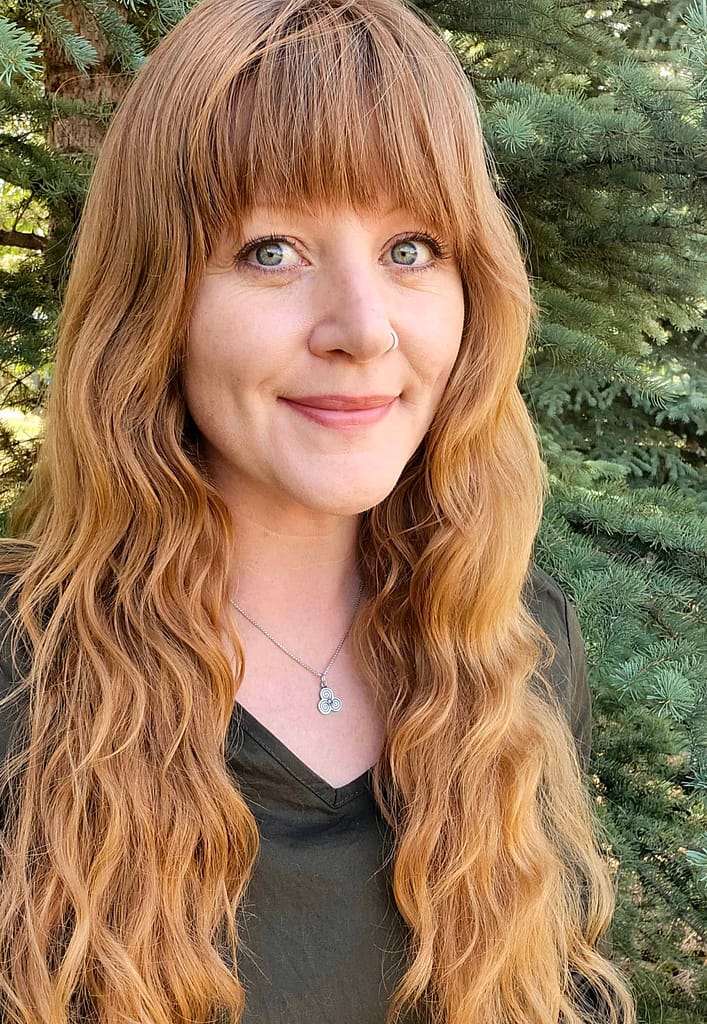
My name is Shannon Lawrence (CCC)
I am a Canadian Certified Counsellor, Psychotherapist, and End-of-Life Companion
I founded the Light in the West after a sudden head injury put me into the painful experience of losing my cognitive health, independence, and emotional well-being. Like many adults, I had a deep well of wisdom and life experience to draw from, but struggled to find accessible mental health support that felt empowering and meaningful to me. Through that recovery, I recognized a need for evidence-based, compassionate, whole person online therapy and complex grief counselling that understand how loss and possibility can co-occur. Drawing from over 20 years as a former hospice Health Care Aide (HCA), Personal Support Worker (PSW) and dedicated caregiver, I became a trauma-informed, integrative therapist to help you connect with the light and beauty that is available, even in times of change and loss.
Frequently Asked Questions
If you have a question you do not see answered below, please send us an email using the contact us field at the bottom and we will follow up within 24 hours
Do you only offer on-line therapy?
At this time, yes. We operate entirely online to serve the unique needs of older adults living in Alberta. By bringing therapy to your home through your computer, tablet or smart phone, we eliminate common transportation and mobility challenges, as well as expanding our services to reach beyond the city. Operating virtually also eliminates the high overhead costs of a traditional physical office. This allows us to keep our rates predictable and affordable while focussing all our resources on deeply personalized, person-centered care.
Is Psychotherapy the same as seeing a Psychologist?
Psychotherapy and Psychology are like different branches of the same tree that have critical differences between them. As a member of the Alberta Counselling Therapy Association (ACTA) and the Canadian Counselling and Psychotherapy Association (CCPA), our work is focussed on talking through emotions, exploring stories, introducing gentle changes to our thought patterns, and creating more supportive communication between our inner and outer worlds. Psychologists do that too, but they are also trained in specific testing and clinical diagnosis that we do not do. For deep emotional support, you see a psychotherapist. For an official diagnosis, you see a psychologist.
Will my workplace benefits or extended private health insurance cover our sessions?
As a Canadian Certified Counsellor and a member of ACTA, many insurance companies will reimburse for psychotherapy, however the amount of coverage available will be specific to each policy. We recommend calling your provider or checking your policy to verify if your plan covers psychotherapy. We provide itemized receipts on the payment day of your session to make your claims process easier. E-transfers are currently accepted for payment.
I’m not very comfortable with computers or technology, can I still do online therapy?
Yes, absolutely. Coming to our virtual office is the same as visiting any website. You will be sent a link to click on in your email and you will be invited to check your microphone and camera when you arrive. We intentionally use a very secure and user friendly, medical-grade, office platform designed wth your comfort and safety in mind. If you ever have trouble with connecting, we can bypass the computer and connect by phone. We really love to see you though, so video calls are preferred.
Can my partner or caregiver set me up for therapy?
Of course! We welcome the help of others to assist with your initial set up, check the connection and settings for audio and video, and position the devices so you are set up and ready to go. However, participating in therapy is an individual choice that you must give informed consent to participate in before we begin. Once your session begins, a private room during your therapy session ensures that your personal information remains confidential and protected from anyone overhearing. It is best that you feel safe to open up in honest conversation with your therapist.
If I don’t have insurance or benefits, do you offer a sliding scale?
Yes. Providing access to effective, affordable therapy is a significant part of our mission to enhance dignity and empowerment. We offer a tiered equity model instead of a single fixed fee with different rates intended to match your needs with your ability to pay. Flexible pricing adjustments are also available if you require the consistency of weekly, bi weekly, monthly, or occasional sessions, helping ensure that your mental health care remains sustainable over time. During your initial consultation, we can talk about these rates to choose whichever model feels honest, accessible and supportive for you.
What if I think I am “too old” for therapy? Can I really change? I’ve felt this way for so long…
The more we learn about neuroscience and how amazing our brains really are, the simple answer is that you are never too old to connect with new ideas, to learn new skills, and to connect with a sense of purpose and peace. The goal of resilient aging is not to erase your past and force you into unfamiliar routines, but to connect to your mind’s natural ability to adapt, heal, and discover fresh perspectives at any stage of life. Our approach is intentionally designed with care and consideration to match the generational values, neurobiology, individuality, and processing needs of older brains.
What if I’m still working and not retired, am I too young for this practice?
Not at all! The journey of resilient aging is marked by the transitions you are navigating, not by a date on the calendar or a set milestone. You can explore who you are as you are getting older at any age, whether that be adjusting to a career change, empty nest or divorce, experiencing ageism at work, stepping into a caregiver role to aging parents, or simply re-evaluating who you want to be as you step into your next chapter. If anything on this page has resonated with you, you are in the right place.
What does “Whole Person Therapy” mean?
Research suggests that the line between mind and body becomes less distinguishable as we get older, so it is important to consider the big picture of your whole self to deal with the simple things first. Consider, for example, if you feel exhausted and withdrawn because you are grieving, because you have a medical condition, chronic pain, stress, and/or because you are hungover and have not been sleeping or eating well: responsible care suggests we consider all of these things before we self-identify with “depression”. A whole person approach means that we look at the spectrum of your experience to untangle what is heavy and what is in reach to enhance your comfort, confidence and ease.
Can we talk about serious topics like chronic illness, cogntive changes or end-of-life planning?
Yes. This practice was specifically built to hold compassionate space for difficult conversations. The phrase we could use here is “Different horizons, same sky“. We provide a gentle, unhurried space to process the emotional and psychological impact of big changes and themes like life, meaning, loss, identity, and purpose.
What if the challenges I am facing are too large or outside of your area of expertise?
Your safety and well-being will always be our top priority. If your needs require a different therapeutic approach or a higher level of specialized care, we will not leave you in the dark. We will help guide you to the right specialists or external resources to support you on your journey.
Let’s find your light!
Email us at thelightinthewest@gmail.com
or find us on Psychology Today https://www.psychologytoday.com/profile/1530433
Please note: The content on this website, including all resources and FAQ answers is for informational purposes only. Online psychotherapy and wellness counselling through the Light in the West supports emotional and psychological well being, and does not constitute nor replace medical advice, diagnosis or treatment. Always consult a qualified health care provider or physician regarding any medical conditions.